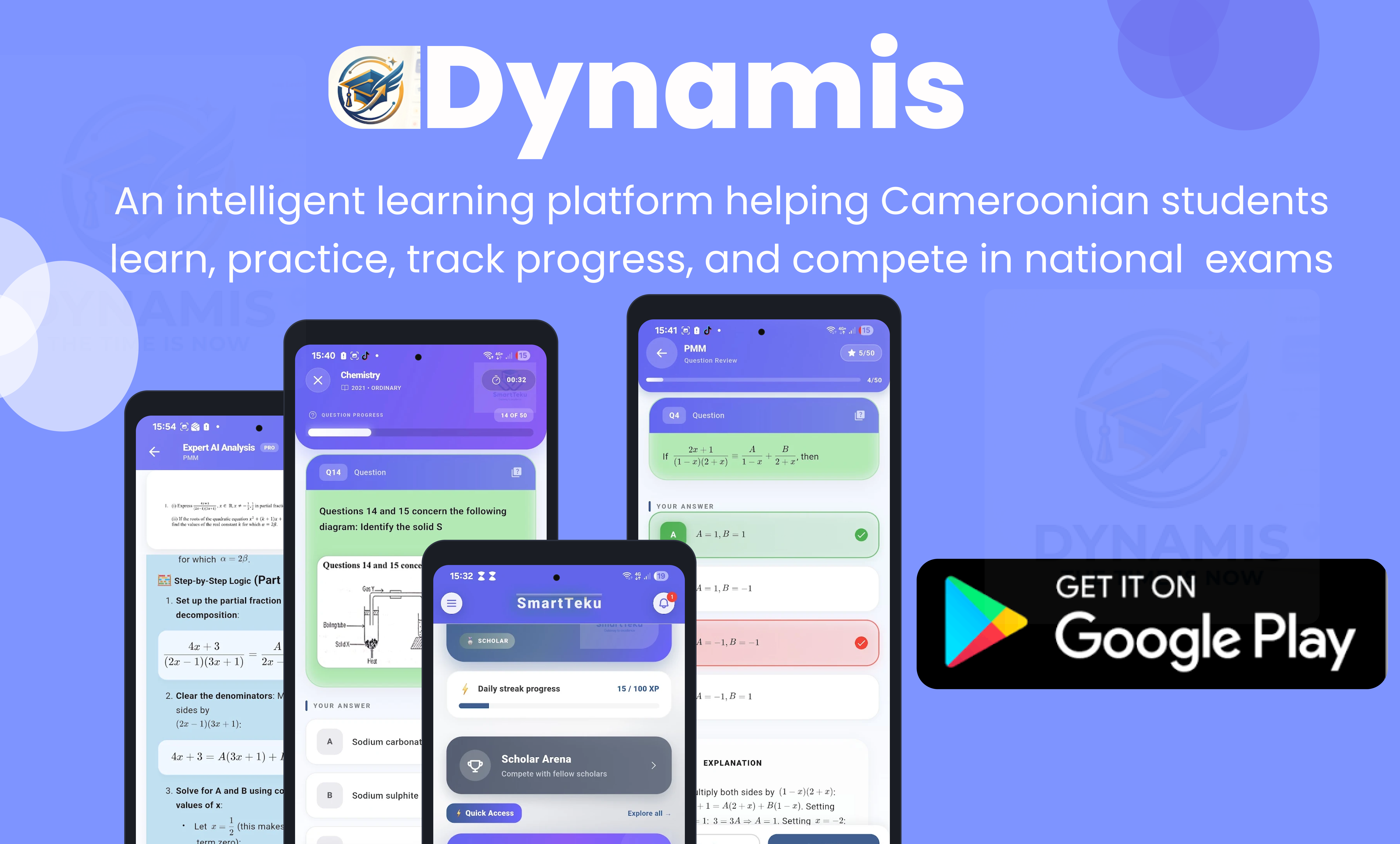
COMPETE. LEARN. RISE.
Student Performance System
Compete. Learn. Rise. Making academic progress visible so students can act on what they know and what they need to practice.
Why DYNAMIS?
DYNAMIS connects learning content, performance measurement and motivational systems. The product aims to make academic progress visible and actionable so students, parents and schools can understand growth in context.
The learning loop
DYNAMIS learning loop
Instead of treating learning, assessment and motivation as separate features, DYNAMIS is designed around a continuous feedback loop. Interact with the nodes to explore each stage.
The problem wasn't just access to content
How might we create a learning experience that makes progress visible, actionable and motivating?
Education frequently separates learning from measurement. Feedback arrives too late. The challenge was shortening that loop and making progress a live, navigable experience.
Who are we designing for?
PERSONA 01 — THE STUDENT
- Improve academic performance
- Prepare for examinations
- Understand weak areas
- Practice consistently
- Stay motivated
- Limited feedback
- Difficulty identifying weak topics
- Exam preparation can feel isolated
- Progress isn't always visible
- Motivation drops without feedback
PERSONA 02 — THE PARENT
- Understand child's academic progress
- Know where support is needed
- Monitor consistency
- Stay informed
- Limited visibility into day-to-day learning
- Results often arrive after the learning process
- Difficult to know where intervention is needed
User needs → Product responses
- Show me whether I'm improving → Progress tracking
- Help me know what to practice → Recommended learning activities
- Tell me why I got this wrong → Explanations and feedback
- Give me motivation to continue → Competitions and achievements
- Help me understand progress → Parent reports
- Tell me where support is needed → Performance insights
From needs to structure
Once the core needs were clear, I translated them into a product structure that supports multiple user journeys without overwhelming students.
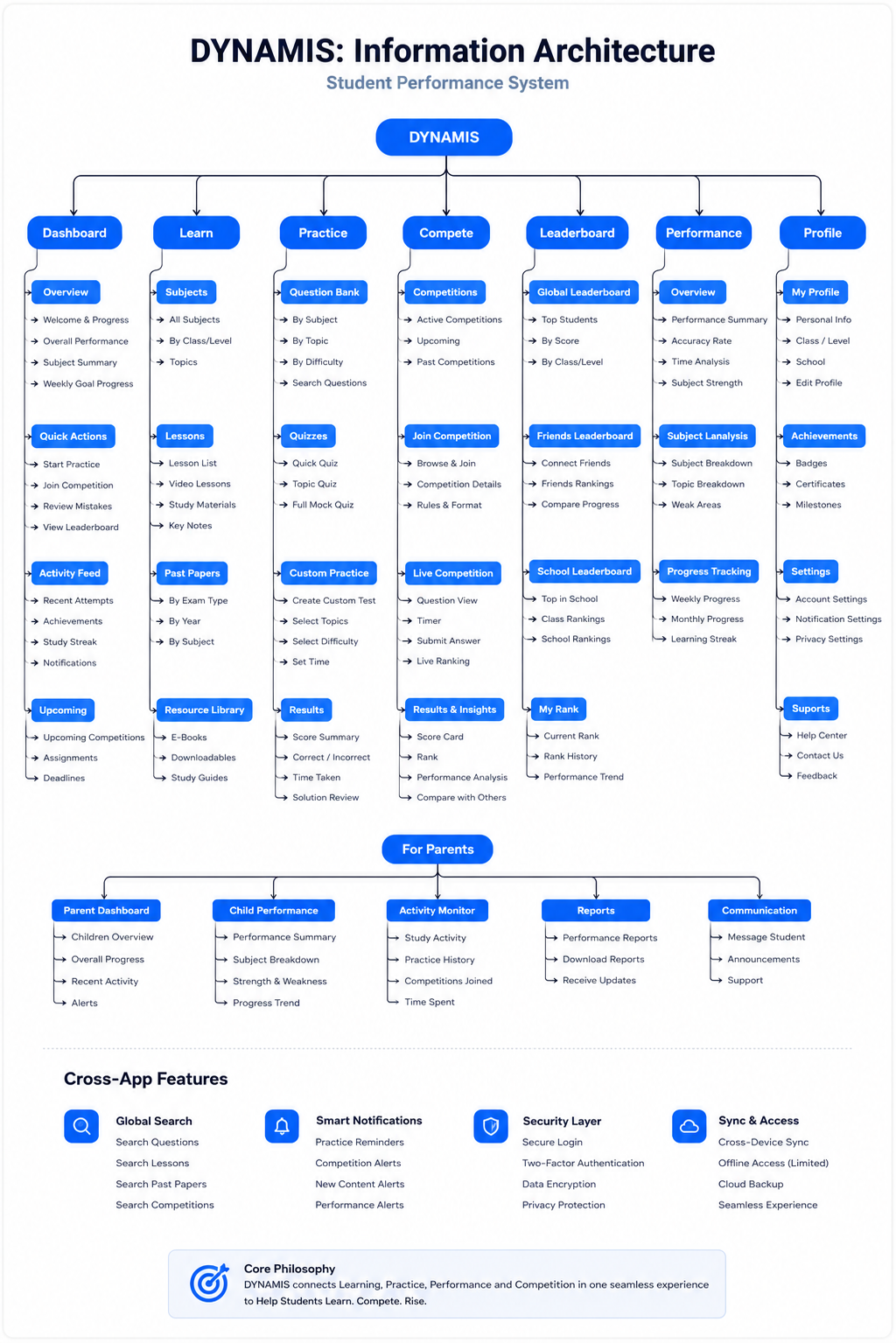
Major areas: Dashboard, Learning, Practice, Competitions, Leaderboard, Performance, Profile, Parent visibility.
Why it works: the dashboard is the starting point; learning and practice form the core; performance closes the feedback loop; competition adds motivation; parent visibility provides monitoring.
Designing the core learning loop
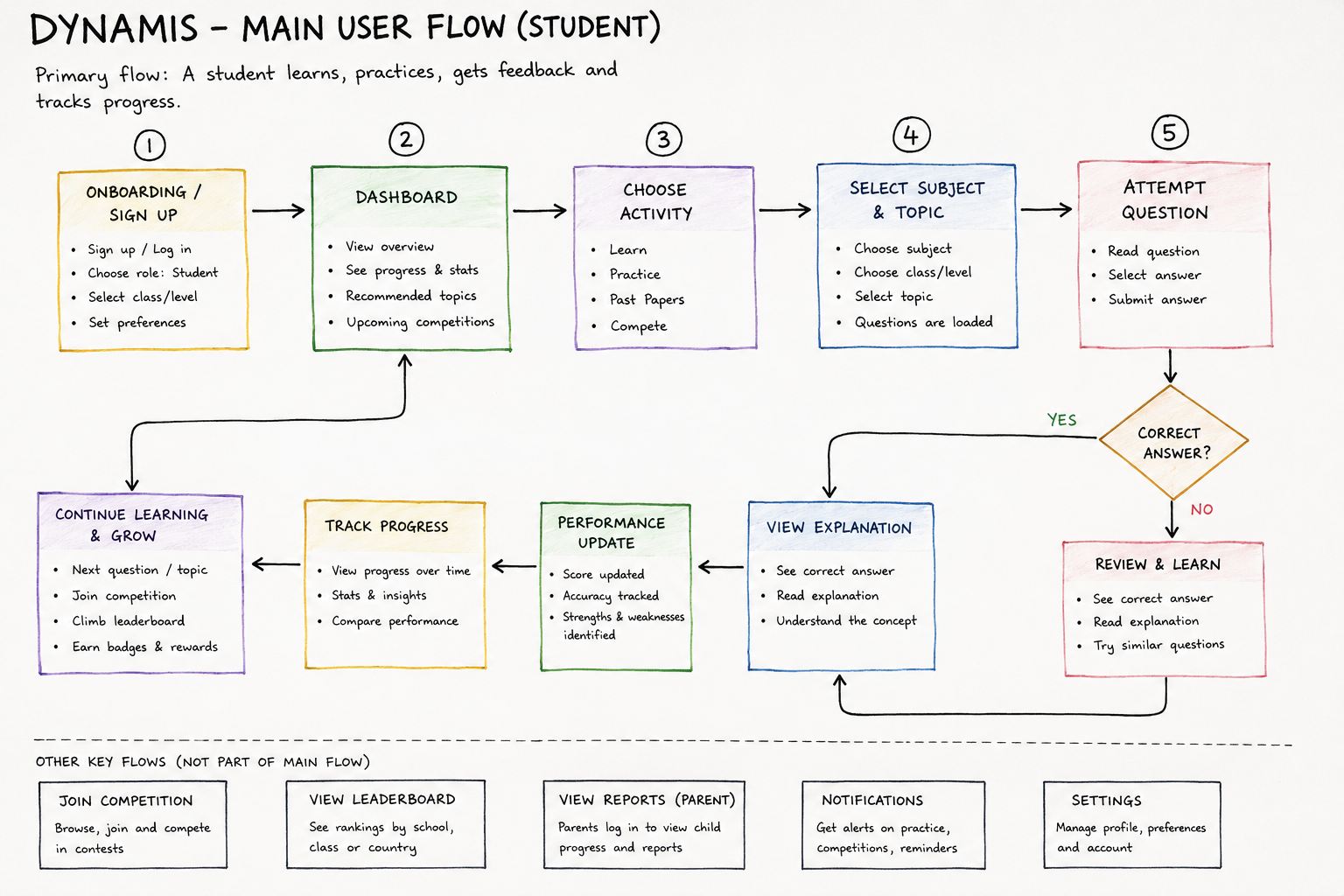
The primary journey was designed around one continuous loop: Learn → Practice → Get feedback → Understand → Track progress → Improve → Learn again.
Key flow breakdown
Discover
Learn / Practice
Feedback
Measure
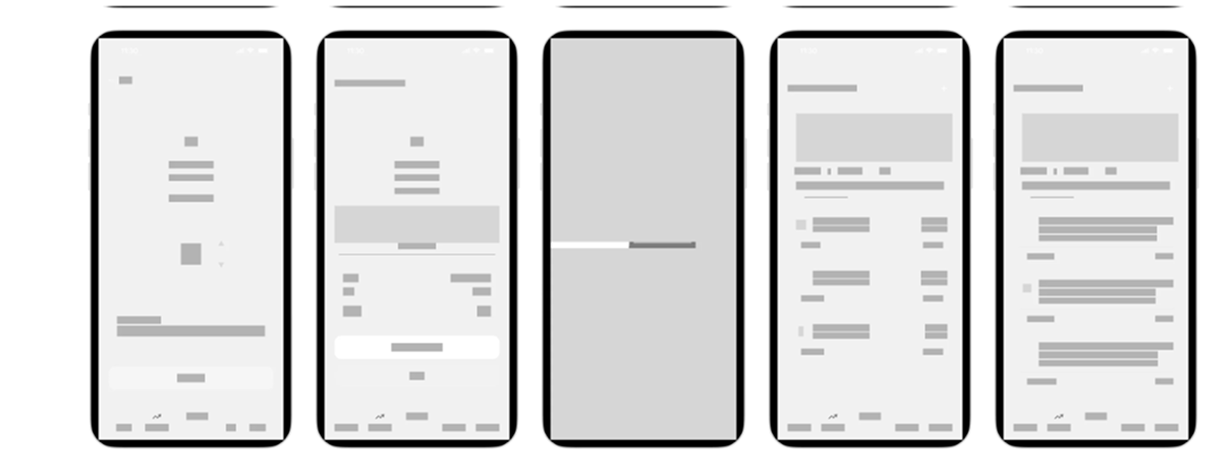
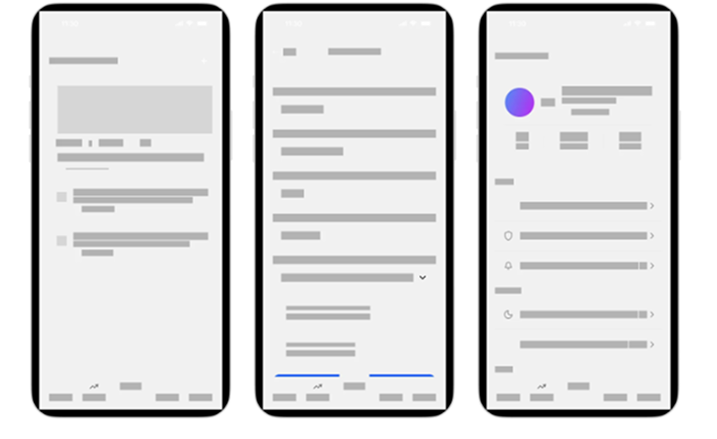
From structure to screens
Before visual polish, wireframes validated hierarchy and primary actions.
The design principles
Building the DYNAMIS experience
The final experience
What I learned